Africa’s manufacturing story isn’t just about building new factories. There are already thousands of manufacturing facilities across the continent with buildings, machinery, utilities and people in place. The problem is that many of them are not operating anywhere near their full potential.Industrial Revival Services: Reviving Africa’s Manufacturing Future
Some are running at reduced capacity. Others are dealing with constant equipment breakdowns, rising operating costs and production delays. And some have been sitting idle for years.
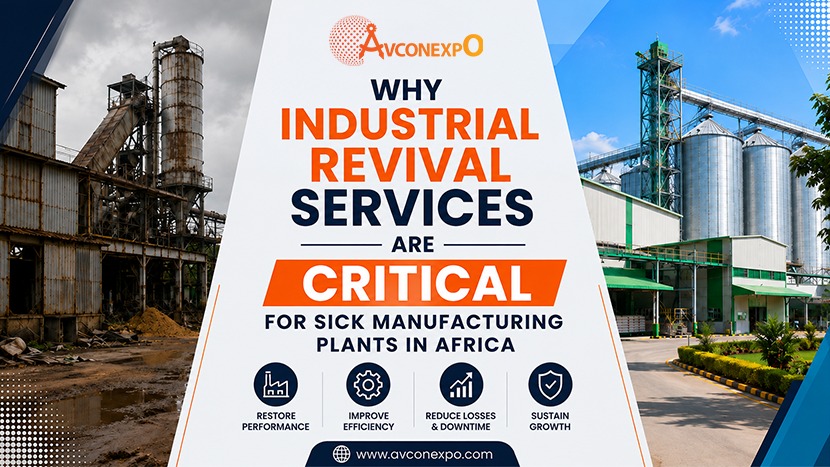
Some are running at reduced capacity. Others are dealing with constant equipment breakdowns, rising operating costs and production delays. And some have been sitting idle for years. So the question isn’t always, “Should we build a new factory?” Sometimes, it’s much simpler: “Can we make the factory we already have work at again?” This is where Industrial Revival Services can make a difference. Bringing an old manufacturing plant back to life isn’t as simple as repairing a few machines and turning the production line on. Before investing more money, it’s important to step back and understand what went wrong in the first place. Where is the plant losing production? What is causing the delays? Which equipment still has life in it, and what actually needs to be replaced? Once you know where the real problems are, you can start building a realistic plan to bring the plant back to proper working condition. Africa already has a large industrial base. Across different countries, there are food-processing plants, oil and edible-oil facilities, packaging plants, dairy factories, chemical facilities and other manufacturing operations that have been built over the years. The challenge is that having a factory does not automatically mean having an efficient factory. A plant may have the right buildings and equipment but still struggle to produce consistently. It may have enough installed capacity but lack the maintenance systems, reliable utilities, skills or processes needed to use that capacity properly. This creates an important opportunity. Before starting from scratch, manufacturers and investors can take a closer look at what they already have and see whether it can be upgraded, improved or brought back to life. In some situations, reviving an existing facility can be a practical alternative to completely rebuilding it. A manufacturing plant doesn’t have to be completely shut down to have a problem. It can be running every day and still be underperforming. You might notice that production targets are regularly missed. Machines break down more often than expected, maintenance costs keep rising, and products are frequently rejected or sent back for rework. Workers may also spend time waiting for materials or equipment, while energy costs continue to increase. Over time, these problems add up and start affecting the overall performance of the plant. Over time, these issues start adding up. Some common signs include: One of these problems may be manageable on its own. When production is low, it’s tempting to immediately start looking for new machinery. “We need a new production line.” But sometimes, replacing the equipment isn't the answer. Imagine a factory designed to produce 100 tonnes a day but currently producing only 50 tonnes. At first, it may seem like the production line simply isn't capable of meeting the target. But a closer look could tell a different story. The machines may actually be capable of producing 100 tonnes, but frequent breakdowns, poor maintenance, an unreliable boiler, slow changeovers, raw material shortages or a lack of trained operators could be limiting production. In that situation, replacing the entire production line could mean a major investment without addressing the real problem. That’s why an industrial performance audit can be a useful starting point. Before deciding where to spend money, the first step is to understand what is actually happening inside the plant and what is holding production back. An industrial performance audit looks at the factory as a whole. It isn't just about checking whether a machine is working. The assessment can look at several areas. Equipment What condition are the machines in? Which ones are critical to production? Can they be repaired or refurbished? Would an upgrade make sense? Production What is the plant actually producing compared with what it was designed to produce? Where are production losses happening? Maintenance How often are breakdowns occurring? Is the plant mainly repairing equipment after it fails, or is there a proper preventive maintenance system? Utilities Can the electricity, water, steam, compressed air, refrigeration and other utilities support the required production consistently? Quality Where are products being rejected? How much material is being lost through rework, defects or process inefficiencies? People Do operators have the right skills? Are responsibilities clear? Are standard operating procedures actually being followed? Costs What does it really cost to manufacture the product? Where are unnecessary costs building up? Technology Are the existing control systems, instrumentation and automation still suitable for the plant? Looking at these areas together gives a much clearer picture of what is actually holding the factory back. Every factory has a bottleneck. The difficult part is finding it. Sometimes the problem is obvious. A critical machine keeps breaking down, so production stops. But sometimes the bottleneck is somewhere else. It could be a packaging line that cannot keep up with production. A boiler that cannot supply enough steam. A transformer that cannot support the required electrical load. Or a water-treatment system that limits production. It could even be something that has nothing to do with machinery. Poor production planning, lack of spare parts, inconsistent raw materials or inefficient movement of materials around the plant can all affect output. This is why Factory Efficiency Improvement needs to look at the entire production system. Fixing one machine while ignoring the rest of the process may not improve the factory's overall performance. Once the plant has been assessed, one of the biggest questions is what to do with the existing equipment. Not every old machine needs to go. Some equipment may only need proper maintenance. Some may need refurbishment. Some may benefit from upgraded controls, instrumentation or automation. And some equipment may simply be too old or unreliable to justify further investment. A proper assessment should help answer four basic questions: This can make a big difference to the overall investment required. Instead of rebuilding an entire factory, the owner may be able to focus investment on the areas that are actually restricting production. An industrial turnaround process is not simply about getting the machines running again. It usually starts with understanding the current condition of the plant. The next step is deciding what needs immediate attention and what can be handled later. Safety-critical issues and major production bottlenecks may need to be addressed first. Other improvements can then be planned in stages. After that comes implementation. Equipment can be repaired or refurbished. Utilities can be stabilised. Production processes can be improved. Required upgrades can be installed and operators can be trained. But there is one stage that is often overlooked: what happens after the plant starts running again? A factory operating for a few weeks does not automatically mean the revival has been successful. The real question is whether production remains stable, equipment remains reliable and the plant can meet its targets consistently. A factory cannot perform well if its machines are constantly breaking down. Yet many plants fall into a familiar cycle: Are preventive maintenance schedules being followed? Are critical spare parts available? Is equipment history being recorded? Are recurring failures being analyzed? The goal is not to prevent every possible breakdown. It is to reduce avoidable downtime and make equipment performance more predictable. For a large manufacturing operation, even a small reduction in unnecessary downtime can make a noticeable difference to production. Technology and equipment are important, but people are still at the centre of manufacturing. Operators need to understand the industrial equipment they are working with. Maintenance teams need clear responsibilities. Production teams need proper procedures and targets. Even good equipment can underperform if the people operating it don't have the right training or if there is no clear system for managing production. A revival programme may therefore involve: The idea is to leave the plant with a system that its own team can continue to manage. Not necessarily Some factories may be too old to restore economically. Some may have infrastructure that has deteriorated beyond practical repair. In other cases, the market may have changed so much that the original production model no longer makes commercial sense. That is why a proper assessment needs to come before a major investment decision. The purpose of Industrial Revival Services isn't to assume that every factory can or should be saved. It is to help answer the more important questions: There is a difference between getting a factory running and getting it performing. A running factory produces something. A performing factory produces consistently, manages its costs, maintains quality, controls downtime and has systems that allow it to keep improving. That should be the goal of a revival project. The aim isn't simply to switch the lights back on. It is to create a factory that can operate reliably and sustainably. Africa's manufacturing future will not depend only on building new factories. Existing industrial assets matter too. There are facilities across the continent that already have years of investment behind them land, buildings, machinery, utilities, warehouses and trained workers. Some of these plants may have much more productive potential than their current performance suggests. Revival doesn't necessarily mean bringing a factory back exactly as it was. It could mean upgrading the technology, changing the production process, improving utilities, introducing automation or even changing what the plant produces. The important thing is to start with a clear understanding of the plant and the market around it. Before investing in new equipment, ask: For manufacturers looking at how to revive a manufacturing plant, the first step doesn't always have to be buying new equipment. Sometimes, the better starting point is simply understanding what is already there. Which machines are still useful? Where is production being lost? What is causing downtime? Are utilities limiting output? Are people and processes working efficiently? Once these questions are answered, the path forward becomes much clearer. A practical revival process can follow a simple sequence: Diagnose → Prioritise → Repair → Upgrade → Recommission → Optimise → Sustain That is what makes Industrial Revival Services more than a repair exercise. The aim is to bring an underperforming industrial asset back to a point where it can contribute to production again—and continue doing so reliably. At Avconexpo, we work with industrial businesses looking at new projects as well as existing facilities that need improvement, refurbishment, or recommissioning. Our support can cover plant assessment, equipment evaluation, production and efficiency reviews, project planning, refurbishment requirements, vendor coordination, recommissioning, and implementation support. For a manufacturing plant that is operating below capacity, facing repeated breakdowns or sitting idle, the first step is not necessarily to start buying new equipment. It is to understand why the plant is underperforming and what it will take to change that. Because Africa's manufacturing future isn't only about building more factories. It is also about making the factories we already have work better. If your plant is underperforming, facing repeated breakdowns or being considered for recommissioning, an industrial performance audit can help identify the key issues and provide a clearer direction for the next stage. Talk to Avconexpo about your industrial revival and factory efficiency improvement requirements.Africa Has Industrial Capacity
When Does a Factory Become “Sick”?
The First Step Is Diagnosis, Not Investment
What Does an Industrial Performance Audit Actually Look At?
Finding the Bottleneck Can Change the Whole Strategy
Repair, Refurbish or Replace?
Understanding the Industrial Turnaround Process
Maintenance Can Make or Break a Revival
Don't Overlook the Utilities
People Are Part of the Revival
Is Reviving an Existing Factory Always the Right Choice?
A Running Factory Is Not Always a Performing Factory
The Bigger Opportunity for Africa
From Sick Plant to Productive Asset
How Avconexpo Can Support Industrial Revival
Is Your Factory Operating Below Its Potential?
Tags