Introduction
Africa is no longer just a market of opportunity. It is becoming a continent of production. Nigeria's cassava processing corridors, Ethiopia's agro-industrial parks, Kenya's growing consumer goods sector, Ghana's One District One Factory programme, and manufacturing investment is accelerating at a pace unseen in decades.
But here is what nobody tells you before you commit capital: the plan that looks right on paper and the plant that runs at capacity are two very different things. The gap between them is where most African industrial projects quietly fall apart, not because of bad intentions, but because the right technical and commercial structure was never put in place from the start.
That structure is what industrial consulting delivers. This guide explains what it covers, where it earns its fee many times over, and how AVCONEXPO approaches it.
What Is Industrial Consulting? And What It Is Not?
Industrial consulting AND EPC Services is end-to-end technical and commercial support for manufacturing projects, from the first feasibility numbers through to a plant running at full capacity. For African manufacturers and investors, it is the difference between a project that stalls at 60% and one that scales to design output from day one.
What it is not: a report that sits in a drawer. Not a rubber stamp for funding. Not generic engineering advice lifted from a European or Asian context and handed to an African project.
The knowledge that makes industrial consulting valuable in Africa is not textbook knowledge. It comes from being on the ground when a grid-tied motor keeps tripping in Kano, or when a shipment sits in Tema port for six weeks instead of two. A consultant who has not navigated those conditions personally will write you a plan that is technically defensible and practically useless.
At its core, it covers:
- -Pre-investment feasibility and detailed project reports (DPRs)
- -Plant layout, process engineering, and design
- -Machinery selection, procurement, and supply chain management
- -Project management from concept to commissioning
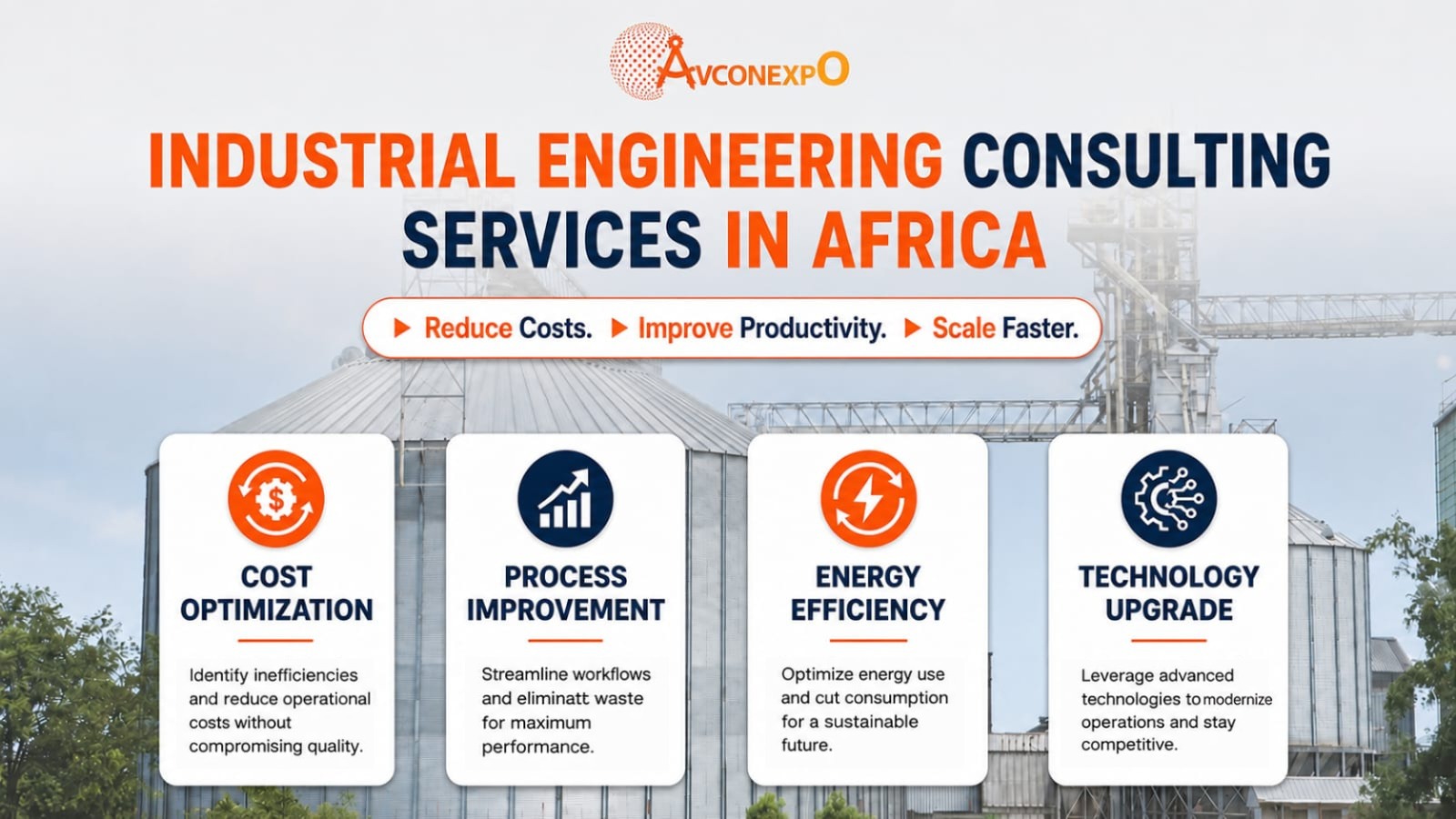
- -Operational audits, energy assessments, and productivity improvement
- -Compliance, quality systems, and standard operating procedures
Why Africa Demands Specialised Industrial Consulting Firms
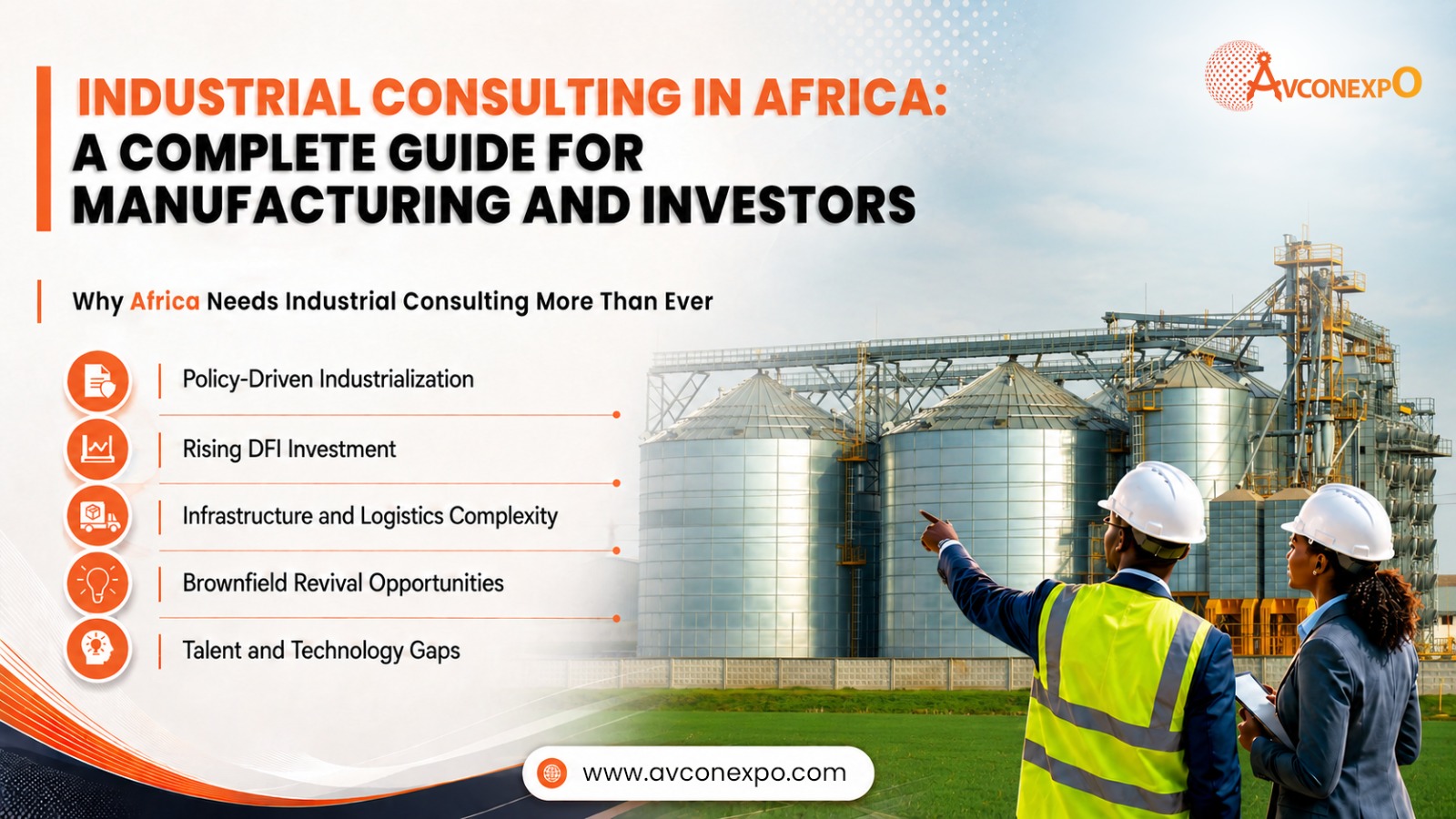
Investors who have built factories in Europe, South Asia, or the Gulf consistently underestimate how differently African projects behave. The variables are not the same, and the margin for error is narrower. This is precisely why industrial consulting firms with genuine Africa experience are worth far more than generalist advisors parachuted in from outside.
Policy-driven industrialisation is creating urgency. Nigeria's ban on raw shea exports, Ghana's restrictions on unprocessed commodities, and Ethiopia's agro-industrial parks programme are forcing investors to build local processing capacity fast. Getting that capacity right from day one requires structured industrial consultancy services not improvisation after the machinery is already on site.
DFI capital is flowing - but it comes with conditions. The African Development Bank, IFC, and bilateral development banks are channelling billions into African manufacturing. These institutions demand rigorous DPRs, feasibility studies, and Owner's Engineer oversight. That is not optional, it is a funding prerequisite, and only experienced industrial consulting firms can deliver documentation that holds up under institutional scrutiny.
Infrastructure and logistics complexity is the reality on the ground. Power reliability, water access, road connectivity, port timelines, and local vendor availability vary enormously by country and region. Without industrial consulting professionals mapping these variables before a single purchase order goes out, investors routinely discover the problems after the capital is already committed.
Brownfield revival opportunities are being overlooked. Across East and West Africa, thousands of industrial assets, sugar mills, edible oil refineries, rice processing units are underperforming or sitting idle. Targeted industrial consultancy services (2) unlock this latent value without the full cost and timeline of a greenfield build. It is one of the most capital-efficient plays available to African investors today.
Talent and technology gaps compound every other challenge. Most African manufacturing businesses want to modernise, automation, energy efficiency, digital systems, but lack the in-house expertise to execute it. Industrial consulting (5) bridges that gap by bringing technical depth that is otherwise simply unavailable locally, particularly in sectors like pharmaceutical manufacturing, waste-to-energy, and specialty chemicals.
Where Projects Go Wrong And Why Industrial Consulting Prevents It ?
After 25 years working on manufacturing projects across Africa, the GCC, and South Asia, the same failure patterns appear on project after project. Understanding them is half the value of engaging the right industrial consulting firms before a project begins.
-Feasibility built on assumptions, not local data. The result is a plant running at 40 to 60% of projected capacity because raw material costs, utility availability, or market demand were never properly verified on the ground.
-Machinery procured on price alone. Without technical evaluation, cheap equipment leads to frequent breakdowns, poor yields, and expensive retrofits within two years - in markets where spare parts can be three weeks away by sea.
-No independent oversight during construction. When a contractor self-certifies and no one represents the investor on site, defects surface at commissioning - the worst and most expensive moment to find them.
-Utilities treated as secondary. Power, water, and effluent planning that ignores local conditions produces a plant that cannot reach its design output and requires costly retrofits after capital has already been spent.
-Operational readiness skipped entirely. A focus on construction completion, without preparing the team to run the plant, means commissioning delays and a first year spent diagnosing problems rather than producing product.
These are not edge cases. They are the standard failure mode on unstructured African industrial projects. Structured industrial consultancy services exist to prevent them, not to document them afterward.
Key Industrial Consultancy Services for African Projects
Feasibility Studies and Detailed Project Reports
A DPR is only as good as the assumptions inside it. AVCONEXPO's industrial consulting team builds feasibility studies from ground-up local data - verified raw material pricing, realistic utility costs, in-country regulatory timelines, and market demand research. The output holds up under DFI scrutiny because it reflects what the project will genuinely cost and return, not what an investor hopes to see.
Greenfield Plant Setup
Every early decision compounds over the life of a plant. A poor site choice affects logistics costs permanently. An undersized utility system cannot be easily corrected. A layout that ignores expansion locks you in. AVCONEXPO manages greenfield projects as one integrated process, from site selection through commissioning, so no phase creates problems for the next.
Brownfield Revival and Modernisation
Underperforming and idle assets represent some of the best manufacturing opportunities in Africa - the capital is already in the ground. AVCONEXPO's brownfield industrial engineering consultancy services assess what is actually recoverable, what needs replacing, and whether the investment case genuinely holds. If the numbers do not justify the capital, clients hear that clearly before more is committed.
Owner's Engineer and PMC Services
For investors financing a project but not managing it daily, Owner's Engineer and Project Management Consultancy services provide independent representation on site. AVCONEXPO reviews contractor outputs, flags issues before they become expensive, and ensures delivery against the original specification, across budget, timeline, and technical quality. Without this, investors are relying on the contractor to self-report their own problems.
Energy Audits and Process Optimisation
Energy is one of the highest controllable costs in African manufacturing and among the most consistently mismanaged. AVCONEXPO's energy audits, delivered as part of its broader industrial consultancy services, identify exactly where losses are occurring and produce a prioritised action plan. Most clients achieve measurable savings of 15 to 30% within the first year of implementation.
Supply Chain and Machinery Sourcing
Sourcing equipment for an African project means knowing which vendors carry real after-sales presence in your market, which spare parts are locally available, and which specifications suit actual operating conditions, not theoretical ones. AVCONEXPO manages the full sourcing process as part of every industrial consulting engagement: vendor identification, technical evaluation, price negotiation, inspection, and logistics, with clear accountability for what arrives on site.
Sectors Where Industrial Consulting Firms Deliver the Highest ROI
AVCONEXPO's Six-Stage Industrial Consulting Process
Most project failures happen at the handoffs, between feasibility and design, between procurement and construction, between commissioning and operations. AVCONEXPO's stage-gated industrial consulting model is built to close those gaps:
-
Discovery and Assessment: Understand goals, constraints, and existing assets. For brownfield projects, this includes a full on-site technical audit to establish what is genuinely recoverable before any capital is committed.
-
Feasibility and DPR: Ground-up financial and technical modelling built on verified local data, structured to hold up under DFI and private equity scrutiny.
-
Engineering Design: Plant layout, utilities, and production flow designed for what local infrastructure actually delivers — not what it is supposed to on paper.
-
Procurement and Supply Chain: Vendor qualification, negotiation, inspection, and logistics are sequenced around realistic port clearance and delivery timelines, not optimistic ones.
-
Project Execution and PMC: Construction oversight and commissioning management through independent industrial project management services representation, keeping timelines, quality, and budgets on track throughout.
-
Handover and Support: Team training, documented SOPs, and post-commissioning technical support until the plant runs at design capacity, not just until keys are formally handed over.
What the Right Industrial Consulting Firms Actually Deliver
Faster Timelines and Lower Capital Expenditure
The measurable impact of structured industrial consultancy services shows up directly on the P&L. Delays of 6 to 18 months are common on unstructured African projects, and when traced back, the gaps were almost always visible from the start. A site constraint nobody mapped. A utility assumption nobody verified. A contractor nobody was watching. Proper scheduling built around achievable milestones, with known risks accounted for upfront, eliminates most of these delays before work begins.
On capital expenditure, overruns of 20 to 40% are the standard outcome when procurement runs ahead of engineering and no independent oversight is in place. Competitive procurement and proper sequencing, delivered through experienced industrial consulting firms, consistently bring CAPEX in 10 to 20% below unstructured estimates, savings that routinely exceed the consulting fee many times over.
Better Plant Yields and Stronger DFI Funding Outcomes
Plant yield is where early design decisions show up most visibly. Most unguided African plants spend their first year working toward design capacity rather than running at it typically 30 to 50% below projection, representing real revenue lost while problems are diagnosed. A professionally managed industrial consulting engagement eliminates most of these losses before the plant is built, not after.
On DFI funding access, the quality of your DPR matters more than most investors account for. Documentation built on verified local data gets funded. Documentation built on assumptions gets rejected or approved at significantly worse terms. That is one of the most underappreciated returns on professional industrial consultancy services that African investors consistently overlook until it is too late.
Conclusion
Africa's manufacturing moment is real. So are the ways it goes wrong.
The investors who get it right are not always the ones with the deepest pockets. They are the ones who stress-tested their numbers before committing capital, had independent industrial consulting oversight watching the contractor, and did not discover the power supply problem after the machinery was already on site.
AVCONEXPO brings 25+ years of global engineering and industrial consultancy services experience to Africa's most ambitious manufacturing projects from concept to consumer, scratch to shelf.
If you are evaluating an opportunity, planning a build, or troubleshooting an underperforming plant, talk to us before the next decision — not after.
Get in touch with AVCONEXPO today → solutions@avconexpo.com
Tags
 FAQs
FAQs