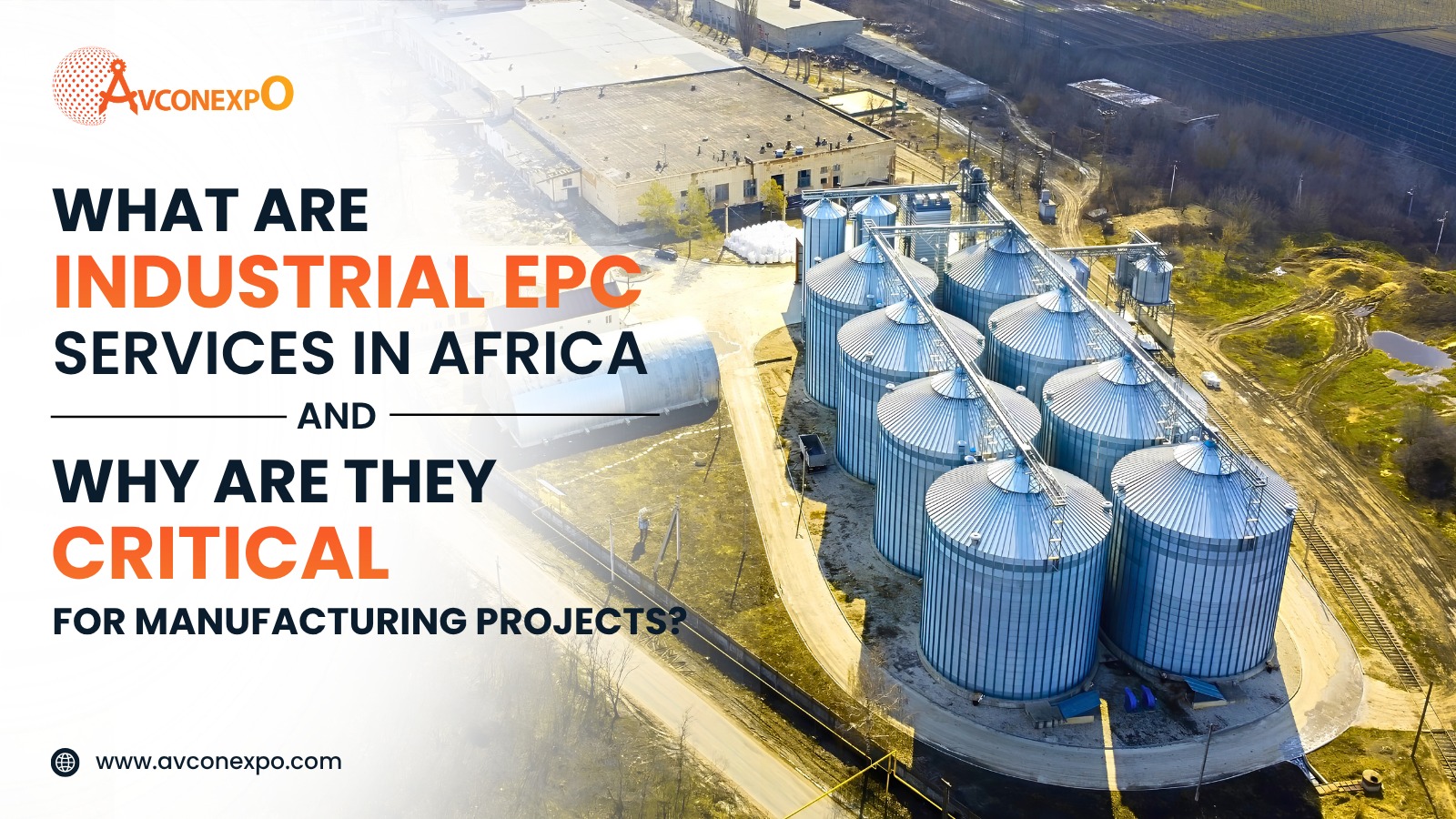
What Are Industrial EPC Services in Africa and Why Are They Critical for Manufacturing Projects?
Anyone who has tried to stand up a manufacturing plant in East Africa knows the project rarely fails at the drawing board. It fails in the gaps. The design is sound, the machines are ordered, the site is cleared, and then three months slip away because the switchgear is stuck at Mombasa port, the local civil contractor built the foundation to the wrong load spec, and nobody can say whose problem it actually is. That gap between a good plan and a running plant is exactly what industrial EPC services exist to close.
EPC stands for Engineering, Procurement, and Construction for project management. On paper it is a delivery model. On the ground it is a way of pinning accountability to one team instead of scattering it across five vendors who each have a reason it wasn't them. For an investor putting capital into a factory in Kenya, Uganda, Tanzania, Rwanda, or Ethiopia, that single-thread accountability is often the difference between commissioning on schedule and watching the budget bleed out over a year of finger-pointing.
What industrial EPC and EPCM services actually cover
The core of any EPC or EPCM engagement is the same three-legged stool. Whether a firm sells them as EPC services or as a managed EPCM package, the work breaks into three disciplines. Engineering turns your production target into detailed drawings, layouts, utility loads, and equipment specifications. Procurement sources the plant, the machines, the ancillaries, and every bolt that holds them together. Construction builds, installs, tests, and commissions until the line is producing sellable products.
Where projects in Africa differ is in how heavy each leg has to be. Procurement carries far more weight here than it does in a mature industrial economy, because lead times are longer, forex exposure is real, customs clearance is unpredictable, and the nearest spare part can be an ocean away. Good EPCM Procurement Services treat sourcing as a risk-managed discipline rather than a purchase order, which is why so many serious investors now ask for EPCM Services specifically instead of a lump-sum EPC package.
That brings up a distinction worth getting right before you sign anything.
EPC versus EPCM: which model fits an African manufacturing project
EPC and EPCM sound almost identical, and vendors are not always careful about explaining the difference. The gap between them decides who holds the risk and who holds the contracts.
An EPC contractor gives you one number and one throat to choke, which feels safe. The catch is that the contractor prices every unknown into that number, and African projects carry a lot of unknowns. That means paying for risk that might never show up. EPCM Solutions work the other way around. Here an Industrial EPCM Contractor runs the engineering, procurement, and construction for you, yet the supplier contracts stay in your name and every cost stays in plain view. In a market where a weak shilling or a stuck container can swing a budget by double digits, being able to see the numbers usually pays for itself.
This is why EPCM Project Management has become the preferred model for serious manufacturing investment across the continent. You keep control of the money and the local relationships while a competent manager keeps the schedule honest.
Why EPCM Services Are Critical for Manufacturing Projects in Africa
There are a few reasons an industrial project in this region needs professional EPCM Project Management rather than a loose group of consultants and a builder.
Local execution risk is the first. A plant is only as reliable as the power feeding it, the water treating it, and the effluent leaving it. A capable Industrial EPCM contractor designs those utility systems around what the site actually has, not around what a European design template assumes. Grid instability in parts of Uganda or Tanzania means your electrical design has to account for gensets and voltage dips from day one, and that is an engineering decision, not an afterthought.
The second reason is procurement discipline. When your compressor is coming from Italy, your packaging line from India, and your boiler from China, someone has to sequence those deliveries so the site is not sitting idle waiting for one late container. Strong EPCM Procurement Services build that sequencing into the schedule, chase the vendors, and manage the port and customs choreography that quietly kills timelines.
Third is compliance and safety. Every country has its own factory regulations, environmental clearances, and occupational health standards, and they are not optional. Getting HAZOP, HIRA, and fire-management design right during the build is far cheaper than retrofitting after an inspector shuts the line down.
Automation belongs in this list too. As FMCG and food processing plants across the region modernise, Industrial Automation EPCM Services have become a specialist requirement in their own right, covering control systems, instrumentation, and the integration work that lets a plant run with fewer errors and tighter data. This integrated approach also aligns with the broader industrial development priorities promoted by organizations such as the African Development Bank (AfDB), which highlights modern industrial infrastructure, digital manufacturing, and efficient project delivery as key drivers of Africa's industrial growth.
Industries We Serve
AVCONEXPO has delivered Industrial Consulting, EPC services and EPCM projects across a wide spread of manufacturing sectors. Our teams have built, revived, and run plants in edible oil and fats, soaps and detergents, dairy and beverages, plastics and packaging, grain storage, and FMCG, foods and sugar. We also work across agri-based industries, tea and coffee, palm oil extraction, bio-energy and bio-fuel, poultry and piggery farms, and full industrial parks. This work spans Kenya, Uganda, Tanzania, Rwanda, Ethiopia, the GCC, and South Asia, covering greenfield builds, brownfield expansions, and sick-unit revival. Whatever the sector, our EPCM Services bring the same engineering and procurement discipline to the site.
What Does a Commercial EPC Cost Look Like?
Most investors ask about money before anything else, and the honest answer is that it varies. The commercial EPC cost of a project is never a single figure you can quote from a brochure, because it moves with plant capacity, technology choice, site conditions, and how much civil work the land demands. A greenfield build on raw land near Kampala carries a very different commercial EPC cost from a brownfield expansion inside an existing compound in Nairobi.
What good EPCM Solutions do is make that cost legible. Instead of a bundled turnkey figure with a fat risk margin baked in, an open-book Industrial EPCM Services model shows you the real price of each package, so you can see where the money goes and negotiate the parts worth negotiating. In practice, this discipline, combined with tighter procurement and design that avoids over-engineering, is where the meaningful savings on project capital come from. Disciplined EPCM Project Management is what turns those savings from a promise into a line on the final account.
Challenges in EPC (and How They Are Managed)
Even well-run EPC services hit obstacles in Africa, and spotting them early is how solid EPCM Services keep a project on schedule.
Scope creep - controlled with clear specifications and change management from day one.
Currency swings - hedged and tracked through open-book procurement.
Port and customs delays - planned around with realistic lead times and delivery sequencing.
Power and utility gaps - designed for with gensets and backup built into the electrical scope.
Skills shortages - closed by training local operators before the team hands over.
Choosing the Right EPCM Contractor for Process Industries
Searching for "EPCM contractor for process industries" or typing "commercial EPC near me" into a browser will hand you a long list, and most of it will not have set foot on an African site. Proximity matters less than track record. Industrial Engineering Consulting and EPC services are only as strong as the sites the firm has actually commissioned. What actually matters is whether the firm has commissioned plants under the conditions you are about to face.
A few things worth checking before you shortlist any EPCM providers:
Have they delivered in your specific country, or at least a comparable regulatory and infrastructure environment? A contractor who has only worked in the Gulf may underestimate what East African logistics do to a schedule.
Do they hold the technical bench you need, from process and mechanical engineers to energy, safety, and automation specialists, or do they subcontract the hard parts?
Can they manage the vendor and customs side, not just the drawings? An Industrial EPCM Contractor who cannot handle procurement is only doing half the job.
Will they train your people to run the plant after handover, so you are not dependent on flying in expertise every time something trips?
When people search for EPC providers near me, what they are really after is a partner who will still answer the phone when a pump fails six months after commissioning. That kind of accountability is the whole point of EPCM Solutions, and it is the reason the model keeps spreading across the region.
Key Takeaways
Industrial EPC services provide complete engineering, procurement, construction, and commissioning under one contract.
EPCM services offer greater cost transparency, flexibility, and owner control.
Professional EPC/EPCM reduces project delays, risks, and budget overruns.
Strong procurement and project management are critical for successful manufacturing projects in Africa.
Industrial automation improves efficiency, productivity, and operational reliability.
Choose an experienced EPCM contractor with proven African project expertise.
EPC and EPCM solutions support greenfield, brownfield, and factory modernization projects.
AVCONEXPO delivers end-to-end Industrial EPC and EPCM services across Africa for sustainable industrial growth.
Contact Avconexpo for the Best Industrial EPC Services Across Africa
AVCONEXPO brings over a decade of field experience, an in-house bench of engineers and process experts, and a proven track record across East Africa, the GCC, and South Asia.
30+ Years Industry Experience
25+ Countries Served
Greenfield & Brownfield Specialists
EPC + Engineering + Supply Chain Under One Roof
Food, Dairy, FMCG, Cement, Agro Processing Experts
End-to-End Project Delivery
From feasibility to commissioning, we handle EPC services and EPCM services end-to-end. Email solutions@avconexpo.com to start.
Tags
 FAQs
FAQs